

Plastic Access Panels: Best Uses, Sizes and When to Choose Metal Instead Posted by Acudor Access Panels on 16th Nov 2026
Plastic access panels are a low-cost, rust-proof choice for non-rated walls and ceilings that only need light-duty service access. They fall short once fire ratings, heavy impact, or large openings enter the picture.
In this article, we'll cover where plastic panels work best, how to choose the right size, when metal is the better specification, and what to check before you place an order.
Where Are Plastic Access Panels a Practical Choice?
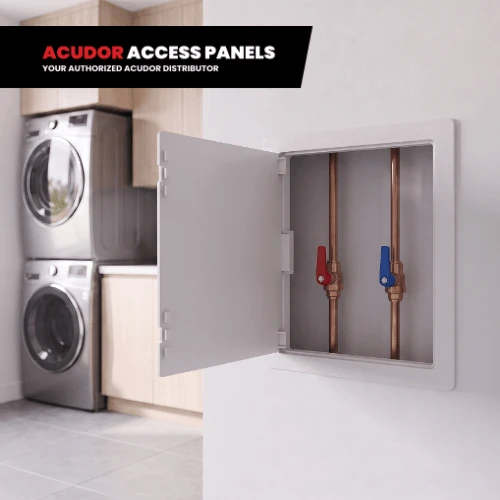
Plastic access panels are a practical choice for interior, non-fire-rated walls and ceilings that need occasional access to plumbing, wiring, or controls. In those spots, plastic access doors deliver the access you need without the cost or weight of steel.
Key Strengths of Plastic Panels
Plastic earns its place through cost, weight, and resistance to damp conditions. Each strength solves a specific problem on the job:
- Lower cost: Plastic access doors usually cost less than steel or aluminum models. That difference adds up fast on jobs with dozens of openings.
- Light weight: One person can carry, position, and set a plastic panel without help. Overhead work in ceilings gets easier as a result.
- Easy installation: Many plastic models mount with adhesive or a simple frame instead of screws and anchors. Crews spend less time per opening.
- Moisture and corrosion resistance: Plastic does not rust, so it holds up in damp rooms better than uncoated steel.
Applications Where Plastic Fits
Plastic wall access panels work best where the opening is small, the wall is non-rated, and traffic is light. Typical examples include:
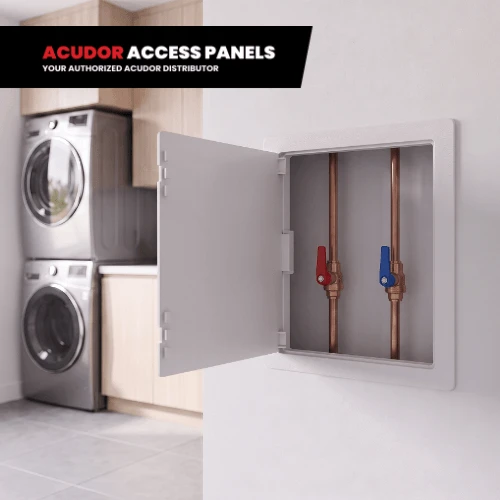
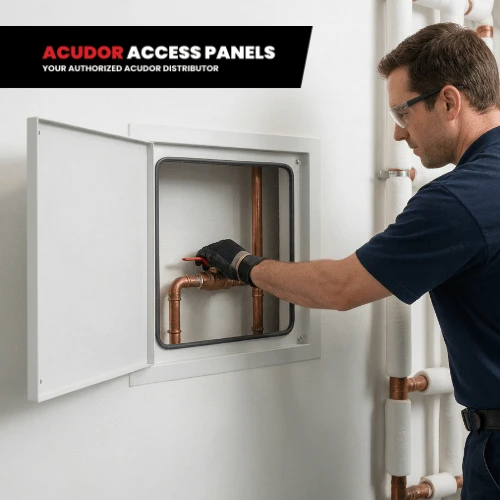
- Plumbing access behind tubs, showers and vanities in homes, condos and hotel rooms
- Shutoff valves, cleanouts and low-voltage junctions in offices and retail back rooms
- Laundry rooms, utility closets and other spaces with regular humidity
Damp locations are where material choice matters most. The EPA's moisture control guidance for building design and maintenance recommends moisture-tolerant materials for areas that can't be kept dry.
If your opening falls in a rated assembly, start with Acudor's fire-rated access doors and panels instead.
How Do You Choose the Right Plastic Access Panel Size?
Choose a size by measuring what you need to reach, adding room for hands and tools, then matching that number to a stocked size. Skipping any of these steps is the most common reason a panel gets sent back.
Measure the Opening and What Sits Behind It
Start with the component you need to reach, such as a valve, cleanout, or junction box. Measure its width, height, and depth, then note where it sits in the cavity.
Next, check the framing around it. Stud and joist spacing limits how wide a panel can go without cutting into structure.
Allow Service Clearance
A panel that barely clears a valve handle may still be too tight for a wrench. Size up enough to fit hands, tools, and any part that must come out through the opening.
Near HVAC equipment, code minimums can decide the size for you. The International Mechanical Code calls for a level working space at least 30 inches deep and 30 inches wide on an appliance control side.
Check Available Sizes Before You Order
Plastic access panel sizes come in a narrower range than steel, mostly small to mid-size squares and rectangles. If your measured opening falls between stocked sizes, round up rather than down.
Also check what the listed size describes. Some listings give the clear access opening, while others refer to the frame or the rough opening you cut. Mixing them up can leave you with a panel that won't fit the hole.
Related: What Are the Access Panel Requirements for Mechanical Rooms & HVAC Air Sealing Systems?
When Is a Metal Access Panel the Better Specification?
Choose metal when the wall or ceiling is fire-rated, the panel faces impact, the opening is larger than plastic sizes allow, or the project specs call for it. Any one of these conditions rules out other materials.
Fire-Rated Assemblies
A fire-rated wall or ceiling needs an access door tested and labeled for that rating. A plastic panel is not a substitute.
The rating tells you how long an assembly is built to hold back fire, such as one or two hours. The International Building Code covers fire-resistance-rated construction, including how openings in that construction are protected.
Impact, Abuse, and High Traffic
Steel holds up better wherever panels get bumped, kicked, or pried. School hallways, gyms, parking garages, and public restrooms all fall into this group.
Security is part of the same question. Plastic panels usually close with snap or push latches, while many metal doors offer keyed or screwdriver-operated locks.
Large Openings
Openings beyond the plastic size range call for metal. Steel and aluminum flush access doors come in far larger sizes and stay rigid across a wide span.
Project and Building Requirements
Sometimes the drawings make the decision. A project's access door specification may name a material, finish, gasket, or lock that plastic can't meet.
Hospitals, food service areas and washdown spaces often call for stainless steel or gasketed doors. Owner standards and insurer requirements can add their own conditions, so read the spec section before you substitute.
Related: How Do Acudor Fire-Rated Access Panels Enhance Building Safety?
How Does the PA-3000 Fit Your Access Panel Material Selection Checklist?
The PA-3000 Plastic Access Door fits interior, non-rated walls and ceilings where you need economical, light-duty access. Use the features below to check it against your opening conditions, access needs, and finish requirements.
- 1/8" high-impact styrene with U.V. stabilizers: The door and frame are molded from impact-resistant plastic treated to handle light exposure. It won't rust in damp utility rooms, and the finish holds up near windows and bright fixtures.
- Hinged door with a removable feature: The door swings open on its hinge and can also lift off completely. Techs get a fully clear opening when a repair needs both hands.
- Concealed hinge: Nothing on the face gives the hinge away. Finished walls keep a clean look, with no hardware to snag or paint around.
- Snap latches: The door closes tightly within the frame using snap latches. Routine checks need no keys or screwdrivers, so maintenance visits move faster.
- Flush-to-frame door with rounded safety corners: The door sits level with its frame, and the corners are rounded. In occupied rooms, the panel reads as neat trim instead of an exposed edge.
- One-piece outside flange with a 3/4" deep mounting frame: A single flange laps over the cut edge of the wall. The 3/4" frame depth gives you a quick dimension to check against the wall surface before ordering.
- White, textured finish: Exposed surfaces arrive white with a light texture. The panel blends with standard white walls and ceilings straight out of the box.
Ready to purchase the PA-3000 for your project? Request a quote with your sizes and quantities, and our team will send pricing and availability.
How Does Accurate Ordering Prevent Replacements and Delays?
Even with a well-matched panel like the PA-3000, accurate ordering keeps the wrong panel off the jobsite. A final check of material, size, and project requirements prevents incorrect orders, replacements, and the delays that follow. Before placing the order, review three items:
- Material: Is the opening in an interior, non-rated wall or ceiling that needs light-duty access?
- Size: Does the listed size refer to the clear opening or the frame? The panel should clear the framing and leave room to work.
- Project requirements: Does the spec call for a specific material, finish, latch, or gasket?
Skipping this review can turn one wrong panel into patched drywall, fresh paint, and a second delivery. On multi-unit jobs, that cost repeats in every unit.
Related: 10 Expert-Backed Access Panel Selection Tips for Smarter Commercial Projects
Frequently Asked Questions about Plastic Access Panels
1. Can plastic access panels be painted?
Many can, but check the manufacturer's finish instructions before you start. Textured plastic surfaces generally take paint better than smooth ones.
Keep paint off the latches, hinge, and the gap between door and frame. A painted-shut panel defeats the purpose of having access.
2. Are plastic access panels waterproof?
No, they are moisture-resistant rather than waterproof. Plastic won't rust or rot, but a standard panel isn't sealed against spray or standing water.
For shower walls, washdown areas, or exterior exposure, look for gasketed doors tested for air and water resistance.
3. Can a plastic access panel go on a ceiling?
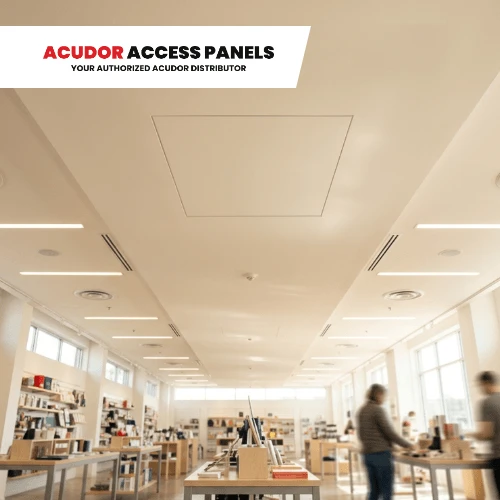
Yes, many plastic panels are made for both walls and ceilings, provided the ceiling is not fire-rated. Their light weight makes overhead installation easier.
Check that the latch is suited to overhead use, especially above walkways. In a suspended ceiling, a lift-out tile may already provide the access you need.
Conclusion
Plastic access panels earn their place on non-rated walls and ceilings where access is occasional and budgets are tight. The decision gets harder at the edges: a rated assembly, a high-traffic corridor, or an opening bigger than plastic sizes allow. Settle those questions first, then match a measured, clearance-ready size to what's in stock.
Not sure which size your opening needs? Contact us or call +1-888-617-4472, and our team will help you choose the right panel before you order.
Acudor Access Panels is a trusted and authorized distributor of Acudor products. We proudly bring you their full range of industry-leading access doors and panels.


