

Which Roof Hatches Meet ADA Compliance and Infrastructure Project Requirements? Posted by Acudor Access Panels on 20th Oct 2025
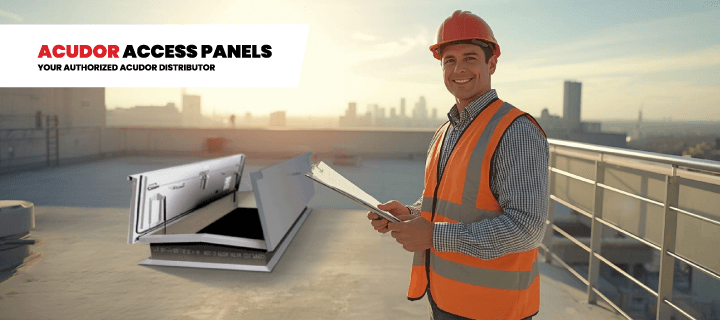
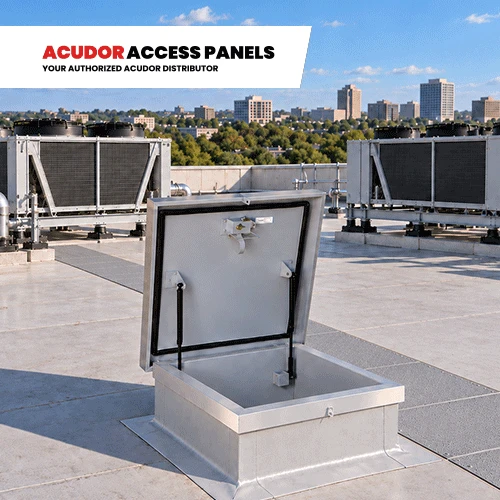
The roof hatches that meet ADA compliance and infrastructure project requirements are designed for accessibility and durability, like the RHA-EQ-DL Double Equipment Hatch – Aluminum. They simplify equipment transfer, enhance safety, and prevent costly code violations.
Too often, contractors discover too late that their chosen roof hatch doesn't meet ADA standards, or the structural and safety codes set by IBC and OSHA.
The result? Failed inspections, site rework, and wasted project hours.
When an access point is designed with compliance in mind, architects, engineers, and contractors specify roof access systems that pass inspection the first time.
Let's break it down.
Why Does ADA Compliance Matter for Roof Hatches?
ADA compliance ensures that all building elements are accessible, safe, and usable for people with disabilities. For public and commercial buildings, ADA compliance is also a legal requirement. If a roof hatch is poorly designed, it fails accessibility goals and risks noncompliance or potential lawsuits. For architects and engineers, that means project delays, costly redesigns, or code rejections.
To meet ADA standards for equipment access, roof hatches need to be easy to lift and operate and have enough clearance.
Accessibility starts with the right design. Explore our compliant roof hatches made for safe, easy operation and built to meet the latest ADA, IBC, and OSHA standards.
How Do IBC and OSHA Codes Align with ADA Requirements for Roof Hatches?
IBC and OSHA set infrastructure requirements and regulations that support ADA's accessibility goals. They specify clear opening sizes, guardrail requirements, ladder clearances, and worker safety features.
For instance, the IBC roof access code allows access to the roof through a hatch or trap door that is not smaller than 16 sq ft, with a minimum dimension of 24” x 24” in some cases. IBC also places guardrail requirements on hatches within 10 feet of a roof edge.
Similarly, OSHA treats roof hatch openings like holes, meaning guardrails, safety gates, or personal fall arrest systems are mandatory. It also mandates minimum clearance dimensions around ladders: 30" back clearance behind ladder centerline to hatch edge, and 15" each side.
ADA and Code Overlap
ADA requires easy operation (low-force lifts, accessible handles) and maneuvering clearance. These overlap with IBC/OSHA guardrail and dimension requirements.
A hatch that is accessible under ADA but violates OSHA fall protection rules isn't acceptable for infrastructure projects. But when all three are satisfied, you get a roof hatch that is accessible, structurally safe, and compliant.
How Can Contractors Ensure Compliance on Infrastructure Projects?
To protect your project from surprises, follow a clear plan to verify compliance before specifying or buying.
- Have a compliance checklist from the outset. During the design phase, confirm dimensions against IBC & OSHA, check assist system force limits (for ADA), and plan space allowances for guardrails.
- Get full manufacturer submittals and certifications. These include stamped drawings, test reports, and compliance warranties.
- Ensure that maintenance staff can practically lift, maneuver, and service equipment through the hatch before a purchase.
- Integrate guardrails in the hatch layout early, because IBC/OSHA may mandate them near roof edges. Don't treat them as afterthoughts to avoid compliance issues.
- Request custom sizes when unique specs are needed. The RHA-EQ-DL and similar models can often be custom-sized to make the hatch fit the roof instead of the other way around.
Related: Commercial Roof Hatch Installs: 5 Proven Leak-Prevention Tips Contractors Trust
What Are the Key Features of ADA-Compliant Roof Hatches?
- Low-Lift Assist System: Pneumatic or spring-assist arms minimize the force to open a roof hatch. This is essential for ADA usability.
- Slip-Resistant Cover: A textured or gritted finish prevents slips, especially in wet or winter conditions.
- Hold-Open Arms or Mechanical Stops: These keep the hatch securely open during transit and servicing.
- Adequate Clear Opening: The hatch should meet dimension thresholds to allow tool passage.
- Thermal Break Insulation: This helps maintain energy efficiency in environments with temperature extremes.
- Weather Gaskets & Sealing: These prevent moisture and draft infiltration or damage from wind-driven rain.
- Mounting Provisions for Guardrail/Gate Hardware: This provision makes it easy to align with IBC/OSHA protection requirements adjacent to the hatch.
Related: Top 5 Pitfalls To Avoid in Elevator Roof Hatch & Smoke Vent Setups
What Roof Hatch Options Support Infrastructure Compliance?
When choosing a roof hatch for a commercial or public infrastructure design, check for configurations that suit your specific use case.
- Single-Leaf Personnel Hatches: These are useful for small maintenance access with minimal equipment movement. Choose versions with low lift assist arms and guardrail compatibility.
- Smoke-Vent Hatches: As the name suggests, these combine roof access and emergency venting functions. They automatically open to release heat, smoke and gases, allowing unobstructed entry and exit during a fire. As such, they must also meet commercial building accessibility and safety codes.
- Heavy-Duty or High-Load Hatches: These heavier-gauge aluminum or steel-reinforced models are ideal for projects expected to handle heavy cart or machine loads.
- Double Equipment Hatches: Double-leaf configuration gives operators space to maneuver while moving bulky equipment or tools, meeting the accessibility ideal without compromise.
Don't let roof hatch selection slow down your inspection approvals. Our experts can help you specify the right model, verify roof hatch code compliance, and choose the right fit for your infrastructure project. Request a quote for ADA-compliant roof hatches.
How Does the RHA-EQ-DL Support Safe, Accessible Roof Entry?
The RHA-EQ-DL Double Equipment Hatch - Aluminum delivers compliance and practical usability from the start. This product features:
- Gas spring operators and an ergonomic handle to allow easy opening and closing. This supports safe access for all users and reduces strain during maintenance.
- Spacious double-leaf design that provides wide, clear openings for moving large equipment like HVAC units or chillers, eliminating risky lifting or disassembly.
- Secure locking system and self-latching hardware with a T-handle and padlock option to prevent unauthorized access.
- Weather-resistant EPDM gasket and R-6 Polyiso insulation to minimize air leaks, heat loss, and condensation, meeting energy and moisture-control standards.
- Heavy-duty, corrosion-resistant aluminum construction with stainless steel hardware for long-term performance.
- Custom sizing for tailored dimensions to help meet ADA operability guidelines and specific infrastructure code requirements.
Frequently Asked Questions About ADA-Compliant Roof Hatches
1. What makes a roof hatch ADA-compliant?
An ADA-compliant hatch supports low force to open, has accessible handles, gives adequate clearance, and allows a broad range of users to operate.
2. What are the OSHA requirements for roof hatches?
OSHA requires roof hatches to provide safe, secure access with proper guarding, slip-resistant surfaces, and locking mechanisms that prevent accidental closure. They must also support safe entry and exit for maintenance personnel while minimizing fall risks.
3. What are the different types of roof hatches?
Common types include single-leaf hatches for personnel access, double equipment hatches for large units or tools, smoke vents for safe emergency exit, and heavy-duty roof hatches for large equipment access.
4. What is the difference between a roof hatch and a smoke vent?
A roof hatch provides routine maintenance or equipment transfer access, while a smoke vent is designed to automatically open and release smoke and heat during a fire. Roof hatches focus on accessibility and safety, whereas smoke vents serve fire code purposes.
5. Does a roof hatch need to be fire-rated?
Not all roof hatches require a fire rating. Fire-rated models are typically specified when the hatch opens from a rated interior space or stairwell. For most commercial rooftops, non-rated but code-compliant, weather-sealed hatches are sufficient.
Conclusion
Choosing compliant roof hatches ensures every project meets modern accessibility, safety, and building performance standards. It protects your reputation, your schedule, and your client's investment.
The RHA-EQ-DL Double Equipment Hatch - Aluminum by Acudor Access Panels represents what infrastructure-grade access should be. It's accessible, durable, and built with code compliance in mind.
Whether designing a commercial complex or a public works facility, this model checks the compliance box while maintaining ease of use and long-term resilience.
Got a project that demands safety and accessibility? Ensure your roof hatches are up to code before inspectors tell you they're not. Contact us or call +18886174472 and get expert guidance and quote-ready specs today.
Acudor Access Panels is a trusted and authorized distributor of Acudor products. We proudly bring you their full range of industry-leading access doors and panels


