

Top 5 Material Innovations Shaping Access Panel Performance in 2026 and Beyond Posted by Acudor Access Panels on 2nd Feb 2026
Modern access panels now leverage lightweight metals, fire-rated cores, recessed designs, grease-resistant metals, and flood-tight constructions to address maintenance challenges. These material innovations are transforming access panel performance in 2026 and beyond.
Contractors and facility managers no longer have to deal with outdated materials that warp, corrode, or fail under fire, moisture, or frequent access. As a result of innovations in access panel materials, commercial buildings achieve greater durability and long-term efficiency.
In this article, we’ll discuss these material innovations in detail, highlighting leading Acudor models that embody these advancements.
Why Are Material Innovations Becoming More Important for Access Panel Performance?
Material innovations are important for access panel performance because modern commercial buildings demand durability, compliance, and lifecycle efficiency that older materials can't reliably provide.
Using innovative materials addresses several key challenges:
- Durability Under Frequent Use: Sturdy metals like steel and aluminum, as well as reinforced composites, reduce wear and deformation. They maintain their fit and function even with repeated access.
- Fire Performance Compliance: Fire-rated access door materials protect rated assemblies, prevent code violations, and support inspection readiness.
- Moisture and Flood Protection: Flood-tight access panels prevent water intrusion, protecting walls, ceilings, and critical building systems.
- Grease and Contamination Resistance: Grease duct access doors and corrosion-resistant metals improve hygiene and reduce fire hazards in kitchens and mechanical spaces.
- Installation and Maintenance Efficiency: Modern materials reduce weight and improve ease of handling, making panels easier to install and service.
- Lifecycle Performance and Cost Savings: Selecting materials designed for long-term resilience lowers repair, replacement, and labor costs over the life of a building.
Explore our full range of Acudor access panels that won't warp, leak, or fail. Find durable specialty access panel options built for compliance and long-term commercial performance.
What 5 Material Advancements Are Shaping Access Panel Performance?
1. Lightweight Materials for Faster Installation and Reduced Structural Load
Thicker doesn't always equal sturdy, and that applies to access doors and panels, too. Access panel manufacturers have found innovative ways to balance rigidity and weight, enabling safer, faster, and more efficient installations that don't compromise durability.
This includes using thinner gauges to keep the panels light, as well as using sturdy but inherently lightweight materials like aluminum.
Keeping materials light is particularly important in ceilings, overhead applications, and large wall openings. Lightweight materials ensure:
- Faster Installation: Lighter panels are easier to maneuver, reducing labor time and project costs.
- Reduced Installer Fatigue: Simpler-to-handle panels reduce the risk of injury and improve on-site efficiency.
- Lower Structural Load: Less weight on ceilings and walls minimizes the risk of sagging or structural strain over time.
The LT-4000 Lightweight Aluminum Access Door exemplifies this advancement. Its aluminum construction ensures both rigidity and faster installation, enabling contractors to maintain the performance of commercial access panels.
Aluminum's corrosion resistance also makes the panel suitable for exterior applications. With its closed-cell neoprene gasketing, this access panel keeps drafts out, protecting interior spaces from the elements.
2. Fire-Rated Materials for Code Compliance and Fire Control
Fire-rated materials are critical for code compliance and building performance. Standard panels often fail to maintain the integrity of rated walls and ceilings. As a result, they create a risk for property damage, liability, failed inspections, and potential fines.
Fire-rated access doors are essential in modern commercial buildings, as they help comply with strict fire codes, including NFPA and local standards.
Modern fire-rated materials incorporate rigid steel panels, insulated cores, and high-quality seals and latches that slow the spread of smoke and fire for a set period. These features help:
- Maintain rating integrity
- Support inspections and maintenance
- Improve lifecycle performance
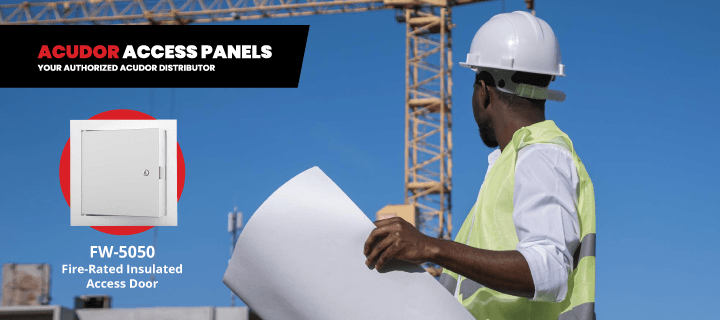
One such product is the FW-5050 Fire-rated Insulated Access Door. With a UL-certified fire rating, this panel slows fire spread for 1-1/2 hours, with a maximum temperature rise of 250 degrees after 30 minutes.
It features a 20-gauge steel door, 16-gauge steel frame, as well as 2"-thick door insulation. Its self-closing and self-latching mechanism ensures the door stays securely closed at all times.
Such panels preserve wall and ceiling assemblies in high-performance, fire-rated applications. Theyprovide reliable access without compromising rated building assemblies.
Fire-rated access panels are ideal for mechanical rooms, corridors, and areas where compliance and repeated access intersect.
Related: What Are the Best Fire-Rated Panels for High-Traffic and Public Infrastructure Projects?
3. Recessed Designs for Seamless Architectural Finishes
Architects increasingly favor flush, concealed access solutions that maintain seamless finishes in commercial interiors. Recessed access panel designs deliver this high-end, virtually invisible look.
These access panels sit flush with walls or ceilings, creating a continuous visual flow without sacrificing function or durability. They can be filled with drywall, plaster, tile, or specialty finishes, depending on their construction.
Designers can match them to any interior or exterior finish. In high-end commercial spaces, they're often specified for lobbies, boardrooms, and tenant-facing areas. While aesthetic integration is important, recessed panels still require structural durability to handle frequent access.
The DW-5058 Non-Rated Recessed Drywall Access Door features a strong recessed construction. It features a strong aluminum door and frame and a wing hinge that allows the door to open at 90 degrees or to be removed from the frame for maximum clearance. Besides strength and durability, this panel also features a concealed touch latch that further enhances its clean look.
In performance-sensitive interiors, recessed panels like the DW-5058 balance design, safety, and long-term reliability.
Request a quote for access panels that install faster, meet code requirements, and perform reliably over time in any commercial project. Call us at +1-888-617-4472 to discuss your project needs.
4. Grease-Rated Materials for Fire Performance and Hygiene
In commercial kitchens, mechanical ducts, and industrial spaces, grease accumulation is a major fire and hygiene risk. Standard access panels don't contain grease or prevent leaks fully, leaving buildings exposed to fire hazards, contamination, and costly maintenance.
Grease-rated materials address these challenges by:
- Blocking flammable residues and reducing the risk of ignition.
- Maintaining hygiene through their smooth, steel surfaces that prevent grease buildup and facilitate cleaning.
- Simplifying inspections by allowing easy access without compromising seal integrity.
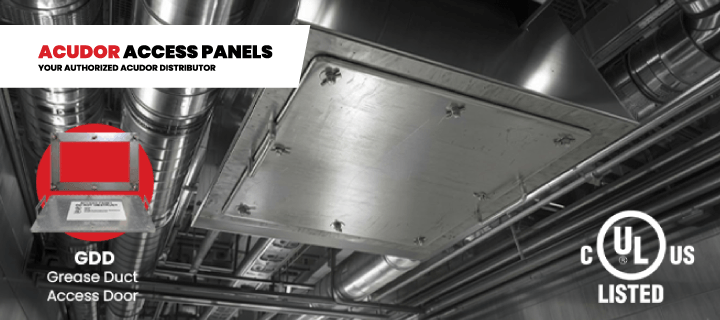
The GDD Grease Duct Access Panel demonstrates the impact of material innovation in grease-heavy environments.
Designed for grease ducts and kitchen exhaust systems, the GDD model combines 16-gauge galvanized steel durability with a high-temperature-resistant gasket to ensure the panel stays grease-tight and airtight.
As a result, it ensures your commercial kitchen stays compliant with both mechanical and fire-related codes.
5. Flood-Tight Materials for Resilience and Water Protection
With rising concerns over climate resilience, flood protection is increasingly critical for ground-level and below-grade access points. Standard panels are prone to water infiltration, which can damage electrical systems, mechanical rooms, and finished interiors.
Flood-tight materials are built to withstand hydraulic pressure. They feature reinforced, waterproof doors, high-quality, pressure-resistant seals, and secure hardware.
The A-FPS Aluminum Floodtight Floor Door exemplifies this advancement. Designed for resilience, it combines a corrosion-resistant 1/4" reinforced aluminum diamond plate with a U-shaped neoprene gasket and steel pressure lock system to ensure long-term durability.
The door is designed for a 625 lbs/sq ft live load, ideal for resilient construction and climate-sensitive projects. It illustrates how material innovation directly improves building performance.
By integrating flood-tight access panels into project specifications, contractors and facility managers safeguard assets, reduce insurance risks, and meet future-ready construction standards.
Related: How To Choose Heavy-Duty Floor Doors That Withstand High Traffic & Industrial Loads
FAQs About Access Panel Material Innovation
1. What materials are best for high-performance commercial access panels?
The best materials improve durability, support code compliance, reduce installation challenges, and extend lifecycle performance in demanding commercial environments. These include lightweight, recessed, fire-rated, grease-rated materials and flood-tight materials.
2. How do lightweight aluminum access panels improve installation and long-term performance?
Lightweight aluminum access panels reduce structural load on walls and ceilings. They make installation easier and faster while minimizing installer fatigue. Aluminum's corrosion resistance also improves long-term durability, especially in exterior or moisture-exposed applications.
3. When are fire-rated access door materials required in commercial buildings?
Fire-rated access door materials are required whenever an access opening penetrates a fire-rated wall or ceiling assembly. They help maintain assembly integrity while still allowing safe maintenance access. Using non-rated materials in these locations can compromise fire resistance, lead to failed inspections, and create liability risks.
Conclusion
Material innovation is redefining what access panels must deliver in modern commercial buildings. Lightweight, fire-rated, recessed, grease-rated, and flood-tight materials are no longer niche upgrades. They are now essential to meeting today's safety, durability, and compliance expectations.
As performance demands increase, access panels must serve as reliable building components. They must support long-term operation and not be weak points that introduce risk.
Understanding how material selection influences installation efficiency and lifecycle performance allows project teams to make smarter, future-ready decisions. At Acudor Access Panels, we help you align access panel materials with real-world building conditions.
Prevent inspection issues, control costs, and improve building resilience with Acudor's innovative designs. Contact our team today to select the ideal access panel materials for your project.
Acudor Access Panels is a trusted and authorized distributor of Acudor products. We proudly bring you their full range of industry-leading access doors and panels.


