

The Contractor's Guide to Seamless Compliant Access Panels for High-Rise & Mixed-Use Projects Posted by Acudor Access Panels on 28th Jan 2026
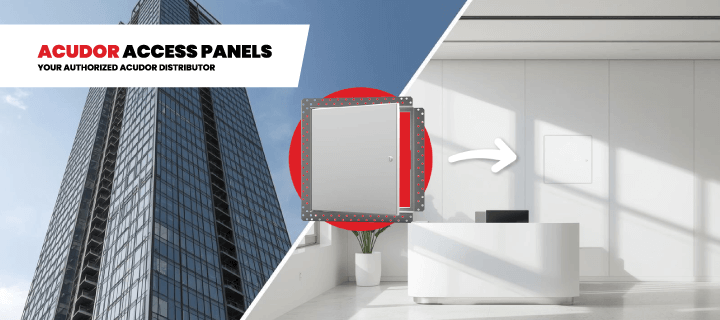
Code-compliant high-rise access panels allow easy service access without compromising fire-rated assemblies or finishes. This fundamental role makes them essential for multi-story and mixed-use projects.
High-rise and mixed-use building access doors must perform reliably across multiple occupancy types. That means various rated wall and shaft systems, as well as vertical service zones.
When access panels are poorly specified or inconsistently applied, they can compromise finishes or fire-rated assemblies, leading to failed inspections and costly rework. These issues often surface late in the project, when schedules are tight, and tenant turnover is approaching.
This is why contractors and project teams prioritize seamless, code-compliant access panels early in the design and coordination phase.
Why Are Access Panel Requirements More Complex in High-Rise and Mixed-Use Buildings?
High-rise and mixed-use buildings combine multiple occupancies, fire-rated assemblies, and stacked building systems. Each is governed by different compliance rules. A single access door decision can affect approvals across several floors and uses.
Multiple Occupancies Create Overlapping Code Requirements
Mixed-use buildings are mostly a combination of residential units, office space, retail areas, parking facilities, and shared amenities within a single structure. Each occupancy type carries its own access and fire-resistance requirements.
In practical terms, this means:
- Access doors and panels acceptable in a retail back-of-house area may not meet requirements in a residential corridor.
- Fire ratings, smoke control, and finish expectations can change by floor
- Inspectors may review the same access location differently depending on its occupancy classification
Using standardized, universal access panels consistently across all occupancies helps reduce the risk of interpretation errors. Code-compliant access doors, on the other hand, simplify the approval process.
Vertical Construction Concentrates Access Needs
High-rise buildings rely on stacked mechanical, electrical, plumbing, and fire performance systems running through shafts and risers. These vertical pathways demand frequent service access while maintaining the integrity of
Common challenges include:
- Limited shaft space requiring precise access panel sizing
- Dense coordination between trades working in confined vertical zones
- Access doors get placed in critical fire-resistance assemblies
In this environment, improperly selected panels can compromise finishes or fire-rated assemblies, triggering inspection failures.
Fire Compliance Scrutiny Increases with Building Height
As buildings get taller, the intensity of inspections increases. Fire stopping, compartmentalization, and access openings are closely reviewed because failures can impact multiple floors.
For contractors, this means that access panels must match the fire rating of surrounding assemblies precisely. Inspectors rarely accept field modifications in vertical construction.
Further, missing documentation or unlisted assemblies can delay approvals. Fire-rated access solutions then become fundamental for compliance.
Tight Tolerances Leave Little Room for Late Changes
High-rise construction schedules are unforgiving. Once shafts, walls, and finishes are installed, replacing or upgrading access doors often means opening rated assemblies and reworking adjacent trades.
Late-stage access panel changes can lead to reinspection requirements, finish damage and repair costs. This puts schedules at risk, affecting multiple floors at once. Early coordination of high-rise access panels reduces these risks and keeps projects moving.
Stop guessing if your access panels will pass inspection. Explore our range of recessed access doors designed to reduce rework, simplify trade coordination, and blend seamlessly with walls and ceilings.
What Challenges Arise When Access Panels Are Inconsistent Across Mixed-Use Spaces?
Visual and Finish Conflicts between Occupancies
In mixed-use buildings, access panels are often visible in finished spaces such as residential corridors, lobbies, and shared amenities. When different panel types are used inconsistently, visual breaks become noticeable and difficult to conceal.
Using consistent mixed-use building access doors helps preserve design intent while still allowing required service access.
Trade Coordination Breakdown during Construction
Inconsistent access panel specifications create confusion between architectural, mechanical, and electrical trades. Each trade may assume a different panel type, size, or rating applies to their scope.
Coordination breakdowns can lead to conflicting rough openings or panels installed before final finish decisions are made.
Standardizing high-rise access panels across similar conditions reduces RFIs and keeps coordination aligned.
Inspection Delays Caused by Inconsistent Documentation
Inspectors expect access solutions to be clearly documented, tested, and repeatable. When similar conditions use different access panels without justification, questions often arise during plan review or on-site inspections.
Common issues include:
- Missing or inconsistent fire-rating documentation, such as UL listings, ASTM testing reports, or third-party certifications
- Panels installed that differ from approved submittals, including size, rating, or manufacturer
- Delays while compliance is verified across multiple floors, particularly in vertical shafts and multi-occupancy zones
To avoid these problems, always reference and submit Intertek UL listings for rated assemblies. Manufacturer installation guides also help to confirm compatibility with walls, ceilings, or fire-rated assemblies.
Consistent use of approved access solutions and proper documentation improves inspection readiness and reduces RFIs.
Operational Confusion for Facility Teams
Mixed-use buildings rely on clear, predictable access to building systems. When access panels differ by area without a clear logic, it complicates coordination during turnover and early operation.
Typical problems include:
- Difficulty locating the correct service access points
- Uncertainty about which panels serve which systems
- Increased risk of damage to finishes during access
Aligning access strategies helps avoid these issues during building operations.
Avoid last-minute substitutions and costly field fixes. Request a quote and get solutions that install correctly the first time, maintain consistent finishes, and keep your inspections smooth.
When Should Access Panels Be Coordinated on High-Rise and Mixed-Use Projects?
Access panels should be coordinated during design development, before rated assemblies, shafts, and finishes are finalized. As mentioned, early access planning:
- Reduces compliance risk
- Limits field changes, and
- Supports predictable approvals across complex vertical buildings.
Waiting until construction is underway often forces reactive decisions that affect multiple trades and compromise consistency across the project.
Why Access Planning Should Start During Design Development
Design development is the stage where wall types, shaft layouts, and service zones are defined. This is also when access requirements can be integrated without disrupting the overall system.
Early planning allows teams to identify where they require access in high-rise locations. It helps teams match panel types to wall and ceiling assemblies and coordinate access locations with architectural layouts.
Specifying code-compliant access panels at this stage prevents downstream conflicts. It also helps avoid last-minute substitutions that trigger rework. Access panels become repeatable elements rather than exceptions. Contractors benefit from:
- Fewer RFIs related to access locations
- Smoother inspections with consistent documentation
- Predictable installation sequencing across floors
Early coordination supports inspection readiness and helps maintain momentum in commercial high-rise construction.
How Do DW-5058 and DW-5040 Support Seamless, Code-Compliant Access?
When high-rise and mixed-use projects require access panels that seamlessly integrate with walls and ceilings, the DW-5058 and DW-5040 provide reliable, easy-to-install solutions.
These products simplify coordination, support inspection readiness, and reduce field rework across mixed-use projects.
DW-5058 Non-Rated Recessed Drywall Access Door
Key features and benefits for mixed-use buildings include:
- Recessed flange that aligns with drywall edges, creating a clean, seamless appearance that works in both walls and ceilings.
- A touch latch closure that eliminates visible hardware, maintaining design intent without compromising functionality.
- The frame can be reversed to accommodate either 1/2" or 5/8" drywall, supporting mixed-use building access doors across different wall types.
- The spring-loaded hinge allows for a 90° opening and removable panels, featuring a safety chain for secure maintenance access.
- Lightweight aluminum construction is durable, easy to handle, and facilitates fast and efficient installation.
DW-5040 Flush Drywall Access Door
Here are the key features and benefits for mixed-use buildings.
- The access panel is designed for post-drywall installation with a flange that doubles as a taping bead. These allow flush, invisible integration with finished surfaces.
- Its screwdriver-operated cam latches and concealed hinges ensure smooth panel operation, eliminating binding, sagging, or distortion.
- Four-sided flange adds rigidity to the access door. It ensures consistent alignment with wall or ceiling surfaces, simplifying inspection and maintenance.
- Galvanized steel with a prime coat finish offers long-term durability while maintaining a visually consistent appearance.
- It's ideal for commercial high-rise construction, where both aesthetic consistency and functional access are top priorities.
Frequently Asked Questions About High-Rise Access Panels
1. What makes access panels code-compliant for high-rise and mixed-use buildings?
Code-compliant access panels meet fire-rating, smoke control, and finish requirements for each occupancy type. They are tested and certified for use in rated wall, ceiling, and shaft assemblies, ensuring inspections pass and multi-story projects remain safe and compliant.
2. Why is it important to standardize access panels across mixed-use buildings?
Standardizing access panels prevents visual inconsistencies. It reduces coordination errors between trades and minimizes substitution risks. Consistent panels simplify inspections, support early approval, and help maintain smooth project schedules.
3. When should access panels be coordinated during high-rise construction?
Access panels should be coordinated during the design development phase, before wall assemblies, shafts, and finishes are finalized. Early planning reduces compliance risks, avoids costly field changes, and ensures predictable approvals for complex vertical projects.
Conclusion
Selecting the right high-rise access panels is crucial for ensuring smooth and compliant construction in mixed-use buildings. Seamless, standardized solutions help contractors avoid finish conflicts, coordination headaches, and inspection delays.
Early planning and consistent specification of code-compliant access panels simplify installation, reduce rework, and keep projects on schedule.
Products like the EDW-5058 access door and DW-5040 access panel make it easy to integrate service access into walls and ceilings without disrupting design or workflow. By prioritizing such solutions, construction teams can ensure predictable approvals and uniform finishes.
Confused by conflicting drawings or inspection notes? Contact our team for expert guidance on coordinating mixed-use building access doors, preventing rework, and ensuring your project's service access is functional and hassle-free. Call us directly at +1-888-617-4472.


