

How to Reduce Project Costs & Boost LEED Certification with Energy-Smart Access Panels Posted by Acudor Access Panels on 11th Feb 2026
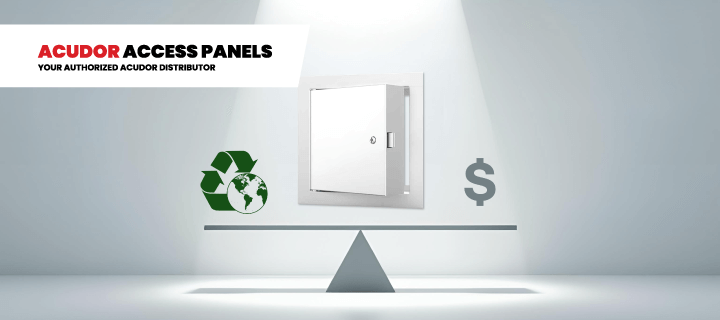
Energy-smart access panels reduce project costs and boost LEED certification by protecting a building's envelope. They eliminate thermal bridges and prevent air leakage, ensuring energy efficiency and indoor comfort.
When access panels are poorly sealed or overlooked in specifications, they can cause energy loss, forcing project teams to make up lost LEED points elsewhere—often at a higher cost.
These small envelope breaches can also lead to change orders, corrective work, and higher energy bills over time. Such disruptions quietly eat into budgets and interfere with sustainability targets.
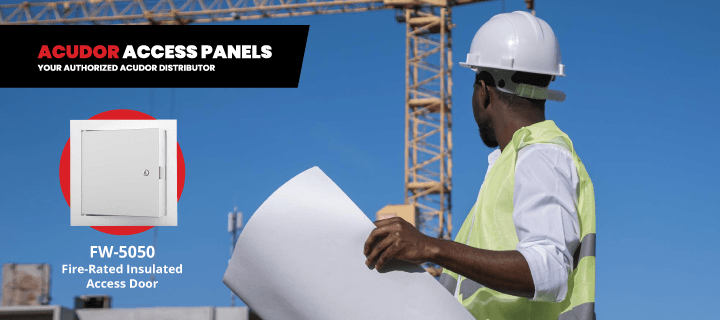
By specifying high-performance units, such as the FW-5050 access door, contractors support LEED certification by contributing to the Energy and Atmosphere (EA) credits.
How Do Access Panels Impact Project Costs and Energy Performance?
Access doors and panels directly impact project costs by acting as either a seal or a leak in a building's thermal envelope.
Air Leakage and Drafts
While often seen as a minor line item, a poorly sealed access door can be a source of air leakage in buildings. It can allow conditioned air to escape into unconditioned spaces. This inefficiency forces HVAC systems to work harder to maintain indoor temperatures.
The result is that the equipment wears out over time, driving up utility bills and shortening its lifespan. The system may require larger, more expensive mechanical parts, increasing its lifecycle costs.
Further, air leakage can cause a building to fail a blower door test. For LEED projects, airtight access panels ensure air leakage control, helping builders achieve points under Energy & Atmosphere (EA) prerequisites.
Thermal Efficiency
Access panels that lack proper insulation or thermal breaks act as "cold bridges" or "heat bridges". They allow heat to bypass the surrounding envelope. This not only drives up heating and cooling loads but also undermines energy modeling assumptions used to justify building performance.
For example, a misaligned or thin panel in a commercial ceiling can create a noticeable temperature gradient. This increases the risk of occupant discomfort, HVAC overload, and wasted energy.
It also translates to higher operational costs over the building's lifecycle. For LEED certification, your building risks failing the infrared thermography inspection.
Installation Labor
When access panels fail energy-code requirements for air tightness or insulation, they force crews to remove, adjust, or replace them after installation. These reactive labor hours are costly and disrupt project schedules. They can delay inspection readiness or occupancy.
Repeated rework to meet commercial energy standards can add up quickly, inflating both labour costs and overall project budgets.
In contrast, energy-smart panels that are pre-engineered to meet code and LEED requirements streamline installation. For instance, fire-rated panels with insulated cores, high-quality gaskets, and heat-resistant doors preserve energy and ensure code compliance in rated walls.
They reduce rework and ensure labor hours are productive rather than wasted on correcting avoidable compliance issues.
Specify access doors designed to support LEED certification. Explore our full range of compliant, energy-smart access panels to prevent air leakage around access doors and maintain thermal envelope continuity.
Why Are Access Points Often Overlooked in LEED-Focused Construction?
Access points are often overlooked in LEED-focused construction because they are perceived as utility components rather than architectural features.
While projects focus on high-performance glazing, insulation R-value, and HVAC efficiency, they often overlook access points. This oversight undermines sustainability documentation. It leads to a disconnect between the energy model and the actual physical performance of the build.
In the rush of a commercial build, it's easy to relegate access panels to the "miscellaneous specialties" division. However, LEED v4 and v4.1 emphasize holistic commercial building energy performance.
If an architect specifies a high-performance wall assembly, but the contractor installs a standard thin-gauge door, the thermal envelope is disrupted. The disruption creates a thermal weak point that shows up on energy audits, potentially jeopardizing the points needed for specific LEED levels.
Furthermore, the documentation required for LEED is often harder to track down for generic panels. These include:
- Recycled content
- EPDs (Environmental Product Declarations)
- Low-VOC emissions
Selecting a panel designed for LEED construction detailing simplifies the administrative burden. Project managers ensure that every component—down to the smallest wall hatch—is working toward the same green building goal.
Which Access Panel Features Contribute Most to Energy-Smart Design?
The most important features for commercial energy-efficient access doors are high-density mineral wool insulation, thick rubber gasketing, and fire-rated integrity. These elements work together to prevent air leakage and heat transfer.
- Integrated Insulation: Look for panels with 2 inches of fire-rated insulation, such as mineral wool or fiberglass. This creates a thermal break that mimics the surrounding wall or ceiling.
- Compression Gasketing: A high-quality neoprene or silicone gasket ensures that when the door is latched, it creates an airtight seal. This is vital for maintaining control of air leakage in pressurized environments.
- Heavy-Duty Latches: To maintain a seal over time, the latching mechanism must pull the door tight against the frame. Self-closing and self-locking mechanisms prevent the panel from accidentally being left open.
- Material Durability: Durable materials like 16-gauge steel prevent the door from warping or sagging, which would otherwise break the air seal and require premature replacement.
When these features are combined, the access panel ceases to be a liability and becomes a strategic asset. If the engineering team makes any energy modeling assumptions, the access door will ensure the theoretical performance of the building matches its real-world utility.
Ready to prevent costly rework from failed performance tests? Request a quote or call us at +1-888-617-4472 today to secure energy-smart panels designed for airtightness, insulation, and fire-rated integrity.
How Does FW-5050 Support Cost Control and Sustainability Goals?
The FW-5050 Fire-Rated Insulated Recessed Door with Flange supports sustainability and cost control by combining energy efficiency, durability, and fire compliance in a single panel. Key benefits that drive cost control and sustainability include:
- Ensures fire-code compliance on the first installation. With UL and ULC fire ratings for walls and Warnock Hersey International ratings for ceilings, the FW-5050 access door meets stringent building codes.
- Reduces energy loss with fire-rated insulation. The 2"-thick, fire-rated insulation limits heat transfer through walls and ceilings, helping maintain thermal performance. This supports energy efficiency goals for LEED or other sustainability certifications.
- Durable materials lower long-term maintenance costs. You can choose between a 20-gauge galvanized door with a 16-gauge frame or a stainless steel door. The FW-5050 resists warping and wear, ensuring long-term reliability.
- The easy-to-install design reduces labor and ensures a perfect fit. The 1" flange allows for a clean appearance with minimal finishing work and a fit that supports airtightness goals.
Related: Top 10 Questions Contractors Ask About Commercial Access Panels—Answered
Frequently Asked Questions About Energy-Smart Access Panels
1. How do energy-smart access panels help reduce construction costs and prevent rework?
Sustainable access panels prevent air leakage and maintain thermal envelope continuity. By ensuring airtightness, insulation, and fire-rated integrity, these panels save labor hours and keep project budgets on track while supporting LEED certification goals.
2. Can access panels impact LEED certification and energy performance?
Yes. Poorly sealed or non-insulated access panels can create thermal bridges and air leaks, which may lower Energy & Atmosphere points for LEED projects. High-performance panels, such as insulated and fire-rated units, ensure your building meets energy performance targets and earns the maximum LEED credits.
3. What features should I look for in an energy-smart access panel?
Look for panels with:
- High-density insulation (like mineral wool or fiberglass)
- Compression gasketing to prevent air leakage
- Heavy-duty latches for airtight sealing
- Durable materials such as 16- or 20-gauge steel.
These features help maintain thermal envelope continuity, reduce HVAC load, and ensure long-term energy efficiency.
4. Why do some access panels require replacement after installation?
Panels often fail energy-code requirements for airtightness or insulation. When this happens, crews must remove or replace them, adding labor hours and increasing project costs. Choosing specialized, energy-smart panels prevents this type of reactive rework and keeps schedules on track.
5. How do fire-rated access panels support sustainability and cost control?
Fire-rated panels such as the FW-5050 combine insulation, airtight sealing, and code compliance in a single product. They reduce energy loss, prevent costly rework, and maintain thermal envelope continuity—helping your building achieve LEED Energy & Atmosphere credits while increasing lifecycle cost savings.
Conclusion
Reducing project costs doesn't just mean finding the lowest price. It's also about finding the highest value. For commercial projects, energy-smart access panels represent a small investment with significant returns.
They protect the building's thermal integrity, simplify LEED certification, and prevent the costly air leaks that affect so many modern facilities.
When you prioritize energy efficiency, you ensure HVAC systems run smoothly, the tenants stay comfortable, and the building's green credentials remain rock-solid for years to come. In a market where sustainability is becoming the standard, choosing the right access door gives contractors a competitive edge.
Have questions about selecting access doors that count toward LEED points? Contact us to speak with an expert and ensure every panel contributes to your project's sustainability and cost-control goals.
Acudor Access Panels is a trusted and authorized distributor of Acudor products. We proudly bring you their full range of industry-leading access doors and panels.


