

How BIM & Real-Time Tech Integrations Streamline Project Coordination & Cut Rework Posted by Acudor Access Panels on 2nd Mar 2026
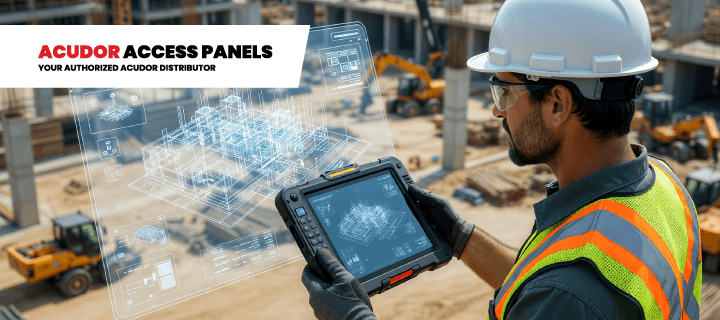
BIM and real-time tech integrations improve project coordination by keeping digital models aligned with real-world site conditions. These tools update the digital model with field data, enabling teams to spot conflicts and resolve issues early.
The results are undeniable. In fact, a 2026 Deloitte industry report found that major construction organizations are rolling out tech solutions such as real-time project management tools, AI analytics, and BIM going into 2026.
However, the challenge is that these tools are only as accurate as the data they're fed. In commercial construction, the lack of coordination between BIM models and field conditions is a leading cause of RFIs and rework.
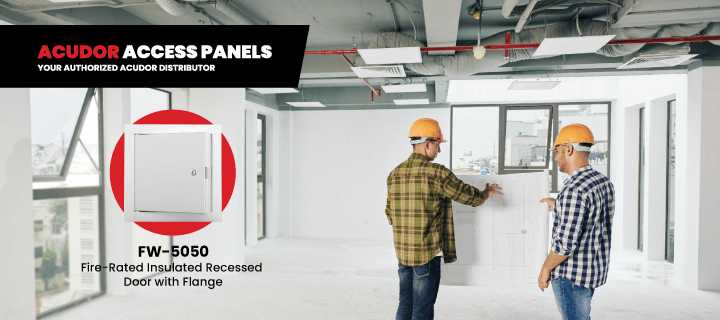
One effective way to minimize BIM construction coordination gaps is to use standardized building components. Universal models, such as the UF-5000 access panel, help ensure that every trade uses a single source of truth.
Let's dig deeper.
How Does BIM Reduce Coordination Issues and Construction Rework?
BIM construction coordination helps identify clashes, access conflicts, and constructability issues during model-based construction planning. These models simulate the construction process, long before work reaches the field.
Virtual Design and Construction (VDC) workflows allow teams to resolve spatial overlaps as they arise. These could be overlaps between plumbing, electrical, and structural systems. They ensure that what's designed can actually be built without on-site modifications.
The Power of Clash Detection
The most immediate benefit of BIM construction coordination is automated clash detection. Instead of discovering a duct running through a steel beam on the 10th floor, software flags the interference in the office.
This proactive approach transforms the job site from a problem-solving environment to an execution environment. When the model is accurate, the field team spends their time installing rather than waiting for instructions on how to bypass an obstacle.
Real-Time Field-to-Model Alignment
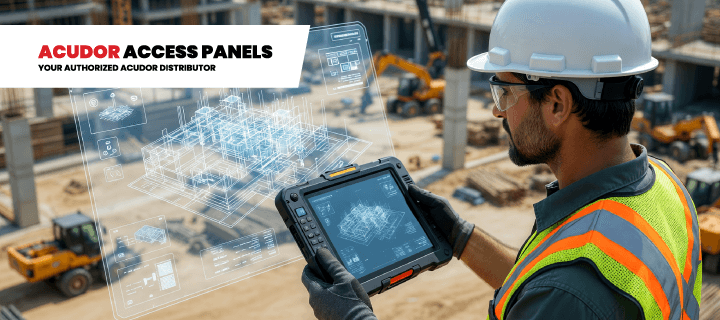
Modern VDC workflows utilize real-time coordination tools that sync mobile devices in the field with the central model. Field teams use tablets and apps to view the BIM model, report changes or issues, and send real-world data back to the coordination team.
If a change occurs, the entire team sees it instantly.
This alignment is critical for maintaining the schedules. It reduces the risk of "stale" information that could lead to a component being installed in the wrong location. When everyone operates within the same model-based construction planning framework, the margin for error shrinks significantly.
Predictability and Risk Mitigation
Standardized components improve predictability across the board. When a project specifies materials consistently, the BIM manager can accurately estimate the space required for installation and maintenance.
This level of detail impacts the bottom line. It lowers the volume of change orders and makes it easy to track procurement data. A recent Autodesk report cites unstructured data as one of the main challenges construction professionals face.
Standardizing access panels improves the accuracy of real-time tech data, mitigating the schedule risks that typically haunt the final 20% of a commercial build.
Ready to improve predictability and reduce coordination risk? Specify our universal flush access panels designed for BIM construction coordination. Increase model consistency and field-to-model alignment across your commercial projects.
Why Do Access Panels Often Create Clashes in Coordinated Models?
Access panels often create clashes because BIM access panel detailing is inconsistent or omitted. The result is issues with commercial project coordination across trades.
The ‘Late-Stage Add-On’ Trap
In many commercial project coordination scenarios, access panels are an afterthought. They are specified late in the game, often after the primary MEP (Mechanical, Electrical, and Plumbing) runs have been finalized.
This creates a ripple effect. If a panel is required to provide access to a junction box but the wall is already crowded with piping, the contractor is forced to "make it work. This usually involves cutting into finished surfaces or compromising the aesthetic design.
The ideal situation? Specifying models during the Design Development (DD) phase.
While this might seem premature, it's a defensive move for the project's timeline. When the framing contractor knows exactly where the panels are and what sizes they need, they can build the rough openings correctly the first time.
Inconsistent Sizing and Architectural Conflict
Without a standardized approach to BIM access panel detailing, different trades may request various types of panels for different surfaces and conditions.
Inconsistent panel types, e.g., hinged vs. Removable, different trim profiles, and varying materials create coordination conflicts and visual inconsistencies. These inconsistencies disrupt the architecture's visual rhythm.
Standardized access panel systems, like universal flush panels, solve this by providing consistent detailing across varying sizes. They enable repeatable BIM families and predictable installation outcomes.
Broken Shop Drawing Accuracy
Late-stage substitutions affect accuracy. When access panels aren't modeled in BIM, they exist in the building but not in the digital model. Therefore, clashes aren't discovered until construction, when they're expensive to fix.
Any last-minute change to a different brand or model can alter the rough opening requirements. This seemingly small shift can invalidate the framing coordination, leading to a cycle of rework that eats into the project's time. Not to mention profit margins and handoff delays.
What Access Panel Attributes Support BIM and VDC Workflows?
Access panels that support VDC workflows are standardized, predictable, and easy to detail consistently in model-based construction planning.
Repeatable BIM Families
Effective BIM access panel detailing works best when project teams have accurate digital models of the exact access panels they plan to install. These digital models, or BIM families, include predefined dimensions, frame thicknesses, door swing clearance, etc.
Since these attributes are built into the model, VDC teams can quickly and consistently place access panels in coordinated drawings—without manually redefining measurements.
When these digital parameters match the real product, teams can coordinate walls, ducts, framing, and finishes with confidence.
Flush Profiles and Clean Layouts
In high-end commercial spaces, architectural layout is paramount. Access panels with flush profiles are preferred because they minimize the visual impact on the wall or ceiling. From a coordination standpoint, a flush-mounted panel is easier to model against other finishes.
It removes the guesswork regarding how much a frame might protrude from a wall, ensuring that nearby hardware or fixtures don't interfere with the panel door's operation.
- Consistent Sizes: Simplifies the framing and drywall coordination.
- Clear Specification Data: Ensures the right fire ratings and material types are captured in the model's data.
- Installation Predictability: Allows trades to plan their runs around the designated access points.
- Lifecycle Data: Provides the facility owner with the exact model and maintenance requirements upon project completion.
Reduce rework and avoid costly change orders. Standardize on coordination-ready access panels early in model-based construction planning. Request a quote to align access panel selection with your VDC workflows and protect your schedule.
How Does UF-5000 Integrate into Coordinated Project Models?
UF-5000 integrates well into coordinated BIM workflows because its universal, flush design supports consistent detailing across multiple wall and ceiling conditions. Its key features and benefits include:
- Universal flush installation across drywall, plaster, masonry, tile, and other substrates. These enable a single access panel system to be modeled consistently across assemblies.
- Flush-to-frame design, rounded safety corners, and a trim flange, which, combined, support clean architectural layouts and coordinated finishes in BIM models.
- A continuous concealed hinge allows for accurate representation of door swing and clearance zones during clash detection and coordination.
- Robust steel and stainless steel construction with defined finishes. These support reliable specification and lifecycle documentation in model-based construction planning.
- Multiple latch and security options, enabling consistent panel detailing across security and maintenance requirements without switching panel types.
- Flexible sizing with standardized detailing, allowing varied access needs while maintaining a single, repeatable BIM family for coordination.
FAQs About BIM Construction Coordination
1. How does BIM construction coordination help reduce construction rework?
BIM construction coordination ensures rework and RFI reduction by identifying clashes, access conflicts, and constructability issues before construction begins. By resolving disputes in a digital model, teams avoid costly on-site changes and delays. This proactive approach improves installation accuracy and protects project schedules.
2. Why should access panels be modeled in BIM during commercial project coordination?
Access panels should be modeled in BIM, to coordinate their size, location, and clearances with mechanical, electrical, and structural systems. When panels are missing from the model, clashes are only discovered during installation, leading to rework and schedule disruptions.
3. How do standardized access panels support VDC workflows and model-based construction planning?
Standardized access panels support VDC workflows by providing consistent detailing and repeatable BIM families that are easy to place across coordinated models. This consistency improves clash detection, shop drawing accuracy, and installation predictability. It also ensures that the physical product matches the digital model, supporting lifecycle data coordination and handoff.
Conclusion
The success of BIM construction coordination doesn't just depend on the software you use. It also largely depends on the quality of the data and the components you put into the model.
To truly reduce construction rework, teams must move away from "placeholder" modeling toward the use of standardized, real-world components.
The UF-5000 access panel is one such standardized unit that brings order to the chaos of commercial project coordination.
When access requirements are treated with the same level of digital diligence as structural steel or mechanical piping, the BIM model gap vanishes. Construction firms can ensure higher quality builds, happier clients, and a more streamlined handoff to facility managers.
Our standardized access panels improve your BIM model accuracy, creating a more accurate data source. Contact our team to plan your access panel strategy and simplify your project coordination from design through handoff.
Acudor Access Panels is a trusted and authorized distributor of Acudor products. We proudly bring you their full range of industry-leading access doors and panels.


