
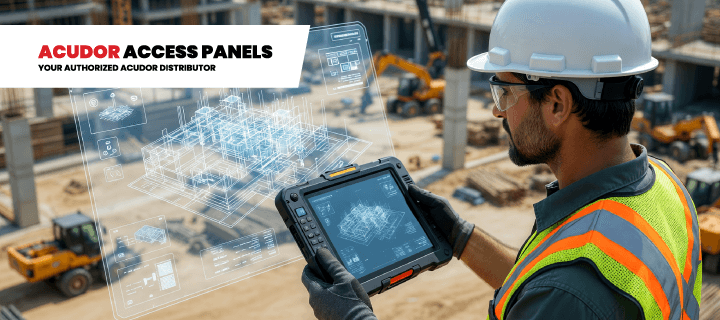
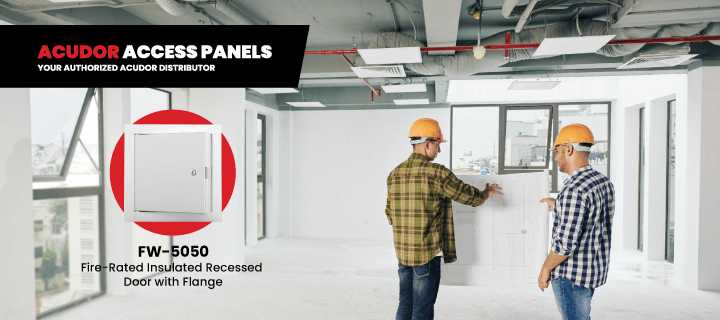


How AI & Predictive Analytics Are Changing Commercial Construction Timelines Posted by Acudor Access Panels on 19th Jan 2026
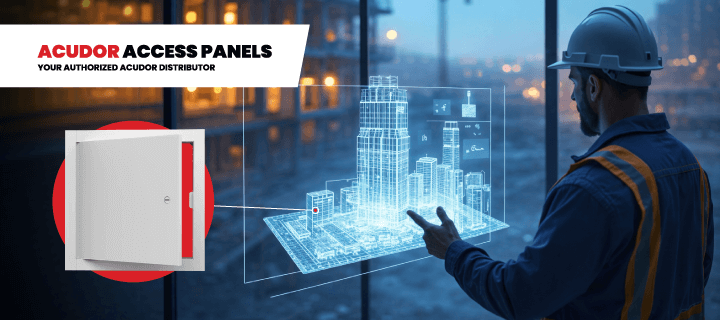
AI and predictive analytics are changing commercial construction timelines by improving the accuracy of schedule forecasts. They help project teams identify labor, material, and sequencing risks early on. As a result, they allow schedules to be adjusted before any delays impact execution.
These technologies analyze historical project data, supplier performance, and real-time inputs to predict where delays are most likely to occur.
However, forecasting accuracy still depends on the quality and consistency of the inputs. Even on projects using advanced construction scheduling technology, factors affecting scheduling persist. Such factors include late deliveries, product substitutions, and over-specified components.
When project managers and contractors are unable to source or install materials as planned, predictive models lose their reliability. This is why standardized components—such as universal access panels—play an important role in data-driven construction planning.
Let's take a closer look.
How Are AI and Predictive Analytics Being Used to Forecast Construction Timelines?
AI in commercial construction transforms historical project data into actionable forecasts, helping contractors make informed decisions. It analyzes past project patterns to predict future outcomes.
In fact, 63% of organizations leverage AI in commercial construction to be more sustainable.
Predictive analytics tools can:
- Estimate labor needs,
- Predict material leads,
- Flag potential bottlenecks, and
- Sequence installation tasks in ways that human planners might overlook.
For instance, AI in commercial construction can anticipate which crews are needed when and align them with specific tasks, such as framing, electrical, or mechanical installations. They create a detailed installation sequencing roadmap that maximizes construction procurement efficiency.
For large commercial projects, this level of sequencing is everything. If drywall isn't ready when HVAC crews arrive, the schedule derails.
As for material lead prediction, construction AI tools analyze supplier performance, lead times, and shipment reliability. If a batch of specialty panels is consistently late, the system flags the risk, allowing planners to adjust procurement and improve schedule forecasting.
The catch? Inputs must be consistent. Over-specified or inconsistent products can undermine even the smartest predictive models.
Struggling with fragmented data and disconnected schedules? Explore our full range of universal access doors, designed to simplify procurement and keep your project on track.
What Factors Still Cause Schedule Delays Despite the Use of Advanced Planning Tools?
No matter how sophisticated the software, construction timelines still get disrupted by unpredictable materials and coordination gaps. Even with AI dashboards, schedules falter when real-world inputs deviate from the expected outcomes.
According to a recent report by Autodesk, trust in AI in the construction industry softened from 80% to 68% in 2025 as organizations face real-world implementation challenges.
- Material and Component Variability: A late delivery, product substitution, or mismatched specification can derail weeks of planning. Access panels are a prime culprit. Multiple types with differing sizes or fire-rated options with varying ratings create confusion on-site. The result is time-consuming rework and inspection delays.
- Coordination and Communication Issues: AI in commercial construction cannot fix human miscommunication. Procurement teams, field crews, and subcontractors must still align their actions. Missing updates or misread schedules create gaps that cascade into delays.
- Risk Mitigation Strategies: Contractors can offset uncertainty by planning early and standardizing components. Reliable, universal products reduce substitution risk. Proactive communication, on the other hand, ensures adjustments are made before minor issues snowball.
How Does Product Standardization Improve Timeline Predictability?
Product standardization creates repeatable project workflows. Products designed for broad applications reduce uncertainty. When project teams know exactly what to order and how it will install, AI models and planners can make confident scheduling decisions.
Simplifying Procurement and Installation
Imagine replacing five types of access panels with a single universal model. Procurement teams face fewer RFIs, vendors ship faster, and installation crews don't waste time adjusting to differing sizes or hardware.
The result is a smoother workflow from warehouse to site.
Supporting AI-Driven Scheduling
Predictive analytics relies on accurate inputs. Standardized products feed models consistent data, which improves forecast reliability. If the access panels arriving match the model's specifications exactly, the planned tasks proceed without interruption.
Cost and Operational Advantages
Beyond time savings, standardization reduces ordering errors and inventory complexity. Fewer substitutions mean fewer change orders, which keeps budgets intact.
On large commercial projects, standardized access panels provide consistent performance across projects. Their reliability often outweighs any additional upfront investment.
Where Does the ED-2002 Fit Into Data-Driven Commercial Construction Planning?
ED-2002 Universal Flush Economy Access Door with Flange integrates with predictive construction workflows by minimizing procurement and installation variability. Its consistent design and versatile application reduce uncertainty, helping project teams align materials with schedules and maintain project flow.
Key Benefits for Data-Driven Construction
- Universal Applicability: Fits walls and ceilings across drywall, masonry, and tile surfaces. This reduces the need for multiple panel types, simplifying procurement decisions.
- Flush-Fit Design with Formed Edges: Streamlines installation, allowing crews to complete work faster and with consistent quality.
- Concealed Pin Hinge and Safety-Rounded Corners: Enhances safety and durability on-site, minimizing rework or inspection issues that can disrupt schedules.
- High-Quality, Durable Finish: Five-stage iron phosphate preparation with a white alkyd baked-on enamel ensures long-lasting performance. It reduces replacements and protects project timelines.
- Flange Configuration: The 1 7/16" mounting flange provides reliable, repeatable installation, feeding accurate inputs into predictive scheduling models.
- Cost-Effective Reliability: While economical, ED-2002 delivers consistent quality, lowering the risk of substitution, procurement errors, and installation delays.
By combining these features, the ED-2002 gives AI and predictive analytics the consistent, high-quality inputs they need to forecast accurately.
Get ahead of delays instead of reacting to them. Align material availability with project schedules by requesting a quote for the ED-2002 access panels, engineered for reliable, predictable installation.
Frequently Asked Questions About AI & Predictive Analytics
1. How does AI improve commercial construction timelines?
AI and predictive analytics improve commercial construction timelines by analyzing historical project data, supplier performance, and real-time inputs. They forecast labor needs, predict material lead times, and identify potential bottlenecks, enabling project managers to adjust schedules before delays occur.
2. Why do construction schedules still experience delays even with predictive analytics?
Even with advanced AI planning tools, schedules can be disrupted by late deliveries, product substitutions, over-specified components, and miscommunication between teams. Predictive models are only as reliable as the consistency and quality of their inputs.
3. How do standardized products help prevent construction delays?
Standardized components simplify procurement and installation by providing consistent, repeatable specifications. Access panel models, such as the ED-2002, reduce substitution errors, streamline installation, and provide accurate data for AI scheduling models, helping projects stay on track.
4. What factors should contractors consider when integrating AI into project planning?
Contractors should ensure that input data is reliable. They can do so by standardizing components to reduce variability, coordinating between teams, and monitoring supplier performance. These steps enhance the accuracy of predictive analytics and improve schedule adherence.
Conclusion
While AI in commercial construction can forecast construction schedules, standardized products support the accuracy of those forecasts.
The combination of data-driven planning and universal components, such as ED-2002, empowers commercial contractors to control variable elements. Think material-driven delays and coordination mishaps.
From labor sequencing to procurement, every aspect benefits when forecasts match reality. Contractors who integrate AI, predictive analytics, and standardized panels find that schedules become more achievable.
Looking to reduce rework and avoid costly timeline overruns? Contact our team to discuss access panel models that align with predictive construction planning and protect your commercial build timelines. Call +1-888-617-4472 today.
Acudor Access Panels is a trusted and authorized distributor of Acudor products. We proudly bring you their full range of industry-leading access doors and panels.


